

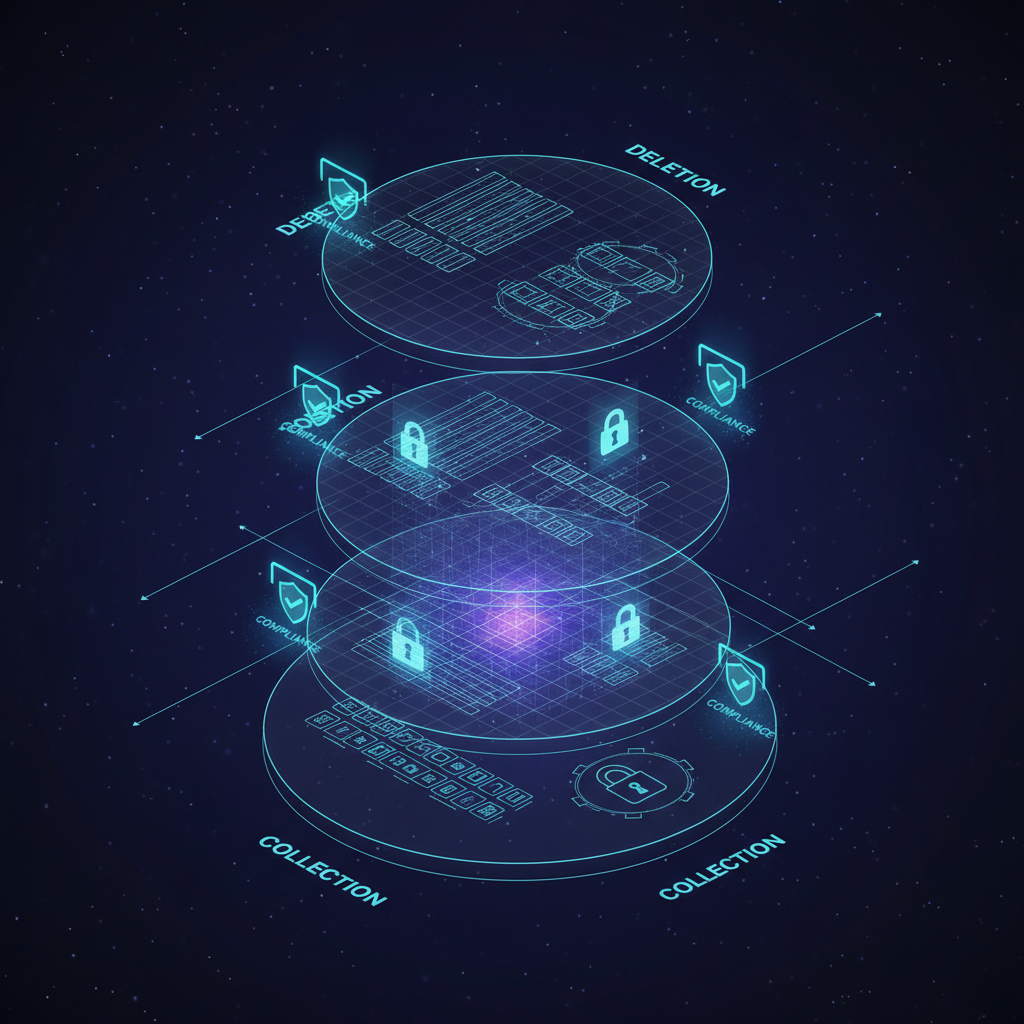
Why Privacy by Design Matters More Than Ever in 2026
The average cost of a data breach hit $4.88M in IBM's 2026 Cost of a Data Breach report — and that number climbs steeply when privacy was an afterthought rather than a design principle. That is not a coincidence. Organizations that bolt privacy onto finished systems spend two to three times more remediating issues than those that bake it in from the start. The math is brutal.
Privacy by design (PbD) is not a new concept. Ann Cavoukian coined the term in the 1990s while serving as Ontario's Information and Privacy Commissioner. But it took GDPR Article 25 — which made it a legal obligation for EU data processors — to force the industry to take it seriously. Fast forward to 2026, and regulators across the US, EU, and Asia-Pacific are actively auditing for it. Ignorance is no longer a viable defense.
So what does it actually mean to implement privacy by design? This guide cuts through the noise and gives you a practitioner's view — the principles, the framework, the real-world examples, and the architectural decisions that make the difference between a privacy-mature system and a liability waiting to happen.
Which Best Describes Privacy by Design?
Here is a question that trips up a lot of people: is privacy by design a legal framework, a technical standard, or a philosophy? The honest answer is all three — and that is precisely why it is challenging to operationalize.
At its core, privacy by design is the practice of embedding privacy protections proactively into the architecture, processes, and data flows of a system — before any personal data is collected or processed, not after. It rejects the remediation-first mindset that has dominated software development for decades.
GDPR Article 25 defines it as implementing appropriate technical and organisational measures designed to implement data protection principles effectively and integrate necessary safeguards. The European Data Protection Board has since published guidelines that expand on what appropriate actually means in technical terms. Spoiler: it means more than encrypting a database column.
The NIST Privacy Framework — which aligns closely with NIST CSF 2.0 — operationalizes privacy by design into five core functions: Identify-P, Govern-P, Control-P, Communicate-P, and Protect-P. This is the framework most US enterprises use when implementing PbD at scale.
The 7 Privacy by Design Principles
Cavoukian's original framework established seven foundational principles. They have not aged poorly. If anything, cloud-native architectures and AI pipelines make them more relevant.
1. Proactive, Not Reactive — Preventive, Not Remedial
Privacy controls get designed in before threats materialize. This is the shift-left mandate applied to privacy. You are not waiting for a breach or a regulator's letter. You are threat-modeling your data flows during sprint planning, not during incident response.
2. Privacy as the Default Setting
Users receive maximum privacy protection automatically — without needing to configure anything. This is the privacy by design and default pairing that GDPR Article 25(2) specifically mandates. Default opt-in for data collection is a violation on its face. Minimum necessary data collection as the default is compliance.
3. Privacy Embedded into Design
Privacy is not a feature added on top of the system — it is woven into the system's architecture. This means data minimization is a schema decision, not a policy document. Retention limits are enforced by the database engine, not by a quarterly manual purge script someone inevitably forgets to run.
4. Full Functionality — Positive-Sum, Not Zero-Sum
Privacy and functionality are not in opposition. You do not have to sacrifice user experience to protect data. Differential privacy, k-anonymity, and tokenization all enable rich analytics without exposing raw personal data. This principle challenges the lazy engineering excuse that all that data is needed to make the product work.
5. End-to-End Security — Full Lifecycle Protection
Data must be secured from collection through deletion. Encryption in transit and at rest is table stakes. But this principle goes further: secure key management, data lineage tracking, and cryptographic deletion are all in scope. At Cloud Security architecture reviews, this is where most gaps surface — data that was supposed to be deleted still sitting in cold storage tiers three years later.
6. Visibility and Transparency
Users and stakeholders should be able to verify that privacy commitments are actually being kept. This means your data processing inventory is auditable, your consent logs are immutable, and your third-party data sharing is documented and defensible. A well-maintained Privacy Policy is the visible expression of this commitment.
7. Respect for User Privacy — Keep It User-Centric
Default settings, UX flows, and consent mechanisms must genuinely serve user interests — not dark patterns designed to coerce consent. Regulators in the EU and UK are increasingly fining companies specifically for manipulative consent interfaces, even when the underlying data processing was technically legal.
When Should Privacy by Design Be Implemented?
The short answer: before you write the first line of code. The more nuanced answer: at every stage of the SDLC where data decisions are made.
Specifically, PbD touchpoints belong in:
- Requirements gathering: Define what personal data is actually necessary. Every data field you do not collect is a data field you cannot breach.
- Architecture design: Decide on data flows, storage locations, access controls, and retention periods at the architecture layer — not as a post-launch policy retrofit.
- Code review: SAST tooling can flag privacy-relevant patterns — hardcoded PII in log statements, missing encryption calls, over-broad database queries. This is automated shift-left for privacy.
- Third-party integrations: Every SDK, API, and vendor you integrate is a potential data processor. Privacy impact assessments belong in your vendor onboarding process, not as a retroactive exercise.
- Deployment: Infrastructure configuration affects privacy. Publicly accessible storage buckets containing user data are a privacy failure, not just a security misconfiguration. CSPM tooling that continuously monitors cloud posture is a direct privacy by design enabler.
- Decommissioning: Data deletion and system retirement are privacy events. Cryptographic erasure, storage media destruction, and revocation of access credentials all belong in your decommissioning playbook.
How Should We Embed Privacy into Our Decisions and Procedures?
This is where most organizations fail — not because they lack awareness of the principles, but because they have not built the operational machinery to make privacy a default behavior across engineering, product, and legal teams.
Privacy Impact Assessments as Engineering Gates
A Data Protection Impact Assessment (DPIA) should not be a legal team exercise that engineers hear about after the fact. Make DPIA completion a hard gate in your product development process for any feature that involves new personal data categories, high-volume data processing, or profiling. Automate the trigger — if a new database table includes fields matching PII patterns, the DPIA workflow kicks off automatically.
Data Minimization in Schema Design
Stop collecting fields just in case. Half the data most SaaS products collect never gets used for any legitimate purpose — it just accumulates technical debt and regulatory risk. Enforce data minimization at the schema review stage. If a field cannot be tied to a specific, documented processing purpose, it does not get added to the schema.
Consent Management That Actually Works
Consent platforms handle the UX layer, but consent data needs to flow into your data processing systems in real-time. If a user withdraws consent for marketing processing, that signal needs to propagate to your CRM, your email platform, your analytics pipeline, and your data warehouse — immediately, not in the next batch job. This is a systems integration problem, not just a legal problem.
Access Controls Aligned to Purpose
Role-based access control (RBAC) is necessary but not sufficient. Privacy by design calls for purpose-based access control — engineers can only access personal data when working on a feature with a documented processing purpose. Attribute-based access control systems can enforce this programmatically. Combine this with Secret Detection in your CI/CD pipeline to catch credentials or PII leaking into repositories.
Privacy Metrics in Engineering OKRs
What gets measured gets managed. Track data minimization ratios, DPIA completion rates, consent withdrawal propagation latency, and time-to-deletion SLAs. These are not just compliance metrics — they are engineering quality indicators. Teams that have privacy KPIs embedded in quarterly objectives consistently outperform those that treat privacy as a legal obligation to be checked at audit time.
Privacy by Design Examples in Practice
Abstract principles are useless without concrete implementation patterns. Here is what privacy by design looks like in real architectures.
Pseudonymization at the Data Layer
A healthcare analytics platform separates patient identity data from clinical event data at the schema level. A pseudonymization service maintains the linkage key, stored in a separate, heavily access-controlled datastore. Analytics workloads only ever see pseudonymized IDs. Re-identification requires explicit authorization and generates an immutable audit log entry. This is how HIPAA-compliant analytics platforms are built.
Differential Privacy in ML Training
Noise injection at the data collection layer means individual user behavior cannot be reconstructed from the aggregate dataset. The model still trains effectively on the statistical distribution. The blast radius of a model extraction attack is dramatically reduced. For teams building AI features, AI-SPM capabilities help surface privacy risks in ML pipelines before they reach production.
Privacy-Preserving Logging
Application logs are a privacy minefield. Stack traces that include user inputs, request logs that include full URLs with query parameters containing email addresses, error messages that echo back form field values — all of these are common and all of them are GDPR problems. Privacy by design here means structured logging schemas that explicitly exclude PII fields, log scrubbing middleware, and automated scanning of log outputs in the CI pipeline.
Containerized Workload Isolation
Running workloads that process different categories of personal data in isolated container environments — with network policies preventing lateral movement between them — is a direct privacy control. Container Image Scanning as part of this pipeline ensures the images themselves do not contain embedded credentials or PII in configuration layers.
Privacy by Design and Default: Understanding the Distinction
These two concepts are often conflated, but they are distinct obligations under GDPR Article 25.
Privacy by design is about the architecture — it is the engineering and organizational measures you implement to make your system capable of respecting privacy. Privacy by default is about the settings — it is the guarantee that, absent any specific user configuration, your system processes only the minimum personal data necessary for the specified purpose.
Practically: a system with strong privacy-by-design architecture but permissive default settings still violates Article 25(2). Both conditions must be met simultaneously. Regulators have been explicit about this. Enforcement actions in 2025 and 2026 repeatedly cited default settings as the primary violation, even where the underlying architecture was defensible.
The Privacy by Design Framework: Operationalizing at Scale
For enterprises operating at scale, privacy by design requires a governance framework, not just good intentions from individual engineers. The components of a mature framework include:
- Privacy Engineering Standards: Documented patterns for pseudonymization, encryption, access control, consent management, and data retention — published internally and enforced via code review checklists and automated tooling.
- DPIA Process Integration: Formal trigger criteria, standardized assessment templates, and documented review workflows that connect engineering, legal, and security teams.
- Vendor Privacy Due Diligence: Third-party data processors must demonstrate equivalent privacy controls. Compliance tooling that automates vendor questionnaire workflows and tracks certification status significantly reduces the manual overhead here.
- Privacy Incident Classification: Not every privacy event is a notifiable breach. A clear classification taxonomy — from low-severity data quality issues to high-severity unauthorized disclosures requiring 72-hour GDPR notification — is foundational to a mature response capability.
- Continuous Monitoring: Privacy controls drift. Configuration changes, new integrations, and infrastructure updates can silently invalidate privacy guarantees that were valid at design time. Automated posture management is the technical mechanism for maintaining privacy guarantees continuously, not just at audit time.
Common Failure Modes
Most privacy by design implementations fail for one of three reasons. First: privacy is treated as a legal checkbox rather than an engineering discipline, so the principles live in a policy document nobody reads rather than in code, schemas, and automated controls. Second: the DPIA process is disconnected from the engineering workflow, so assessments happen after systems are built and nobody has the appetite to redesign based on findings. Third: consent management is treated as a UX problem rather than a systems problem, so consent signals do not propagate reliably to all downstream processing systems.
The fix is not more documentation. It is embedding privacy controls into the development toolchain — the same way security was embedded via DevSecOps. Privacy engineering is the next frontier of that shift-left movement, and organizations that build the operational muscle now will have a significant compliance advantage as regulatory pressure continues to increase through 2026 and beyond.